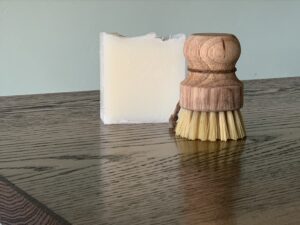
Cold Process Dish Soap Bar
coconut oil based cold process method of soap making to create dish soap bars
Yield: 9 bars
Materials
- 30.40 oz Coconut Oil
- 1.60 oz Olive Oil
- 5.50 oz Sodium Hydroxide
- 12.16 oz Filtered Water
- 30 ml Essential Oils optional
Instructions
- Measure out every single ingredient into its own bowl first (or for experienced soapers: the oils/fat pot can be used to measure both coconut and olive oils in).
- BE SURE TO USE CAUTION WITH LYE! All the proper equipment on (gloves, goggles, long sleeves, mask).
- Allow the oils to melt on the stovetop while you take the lye and water outside to mix together. ALWAYS LYE INTO THE WATER! Stir it well and allow it to sit for 1 minute or until the lye water is mostly clear (no longer cloudy).
- Bring the lye bowl carefully back inside (the bowl will be HOT) and allow it to come down in temperature to around 95-100 degrees.
- Once oils are melted, take the pot off the stove's eye and allow the oils to come down to 90-100 degrees.
- Keep a check on the temperature using a candy thermometer, wiping the stick between the oils and lye water bowls.
- Once the temperatures are right, add the lye water to the oils pot and use an immersion blender to blend together.
- I've found that trace happens fairly quickly so be paying attention!
- At light trace, add in your fragrance oils or essential oils. Or none at all if you prefer a more pure dish soap.
- Carefully pour the soap mixture into the loaf pan, place a sheet of parchment paper over top, then a towel to hold in the heat and allow the soap to slowly cool down.
- Place the soap loaf in a safe, secure place. This soap loaf will be ready to cut in about 12 hours. Any longer and it becomes hard to cut. Not impossible, just much harder.
- Allow dish soap bars to cure for 4 weeks on ventilated shelving or rotate the bars every other day to allow for efficient curing.
Notes
Makes 9- 4 ounce cut dish soap bars.
More soap recipes and natural cleaning ideas at www.johnsonhomeNC.com