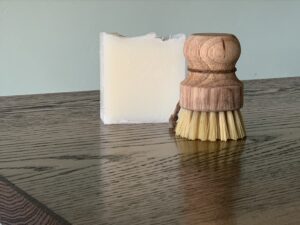
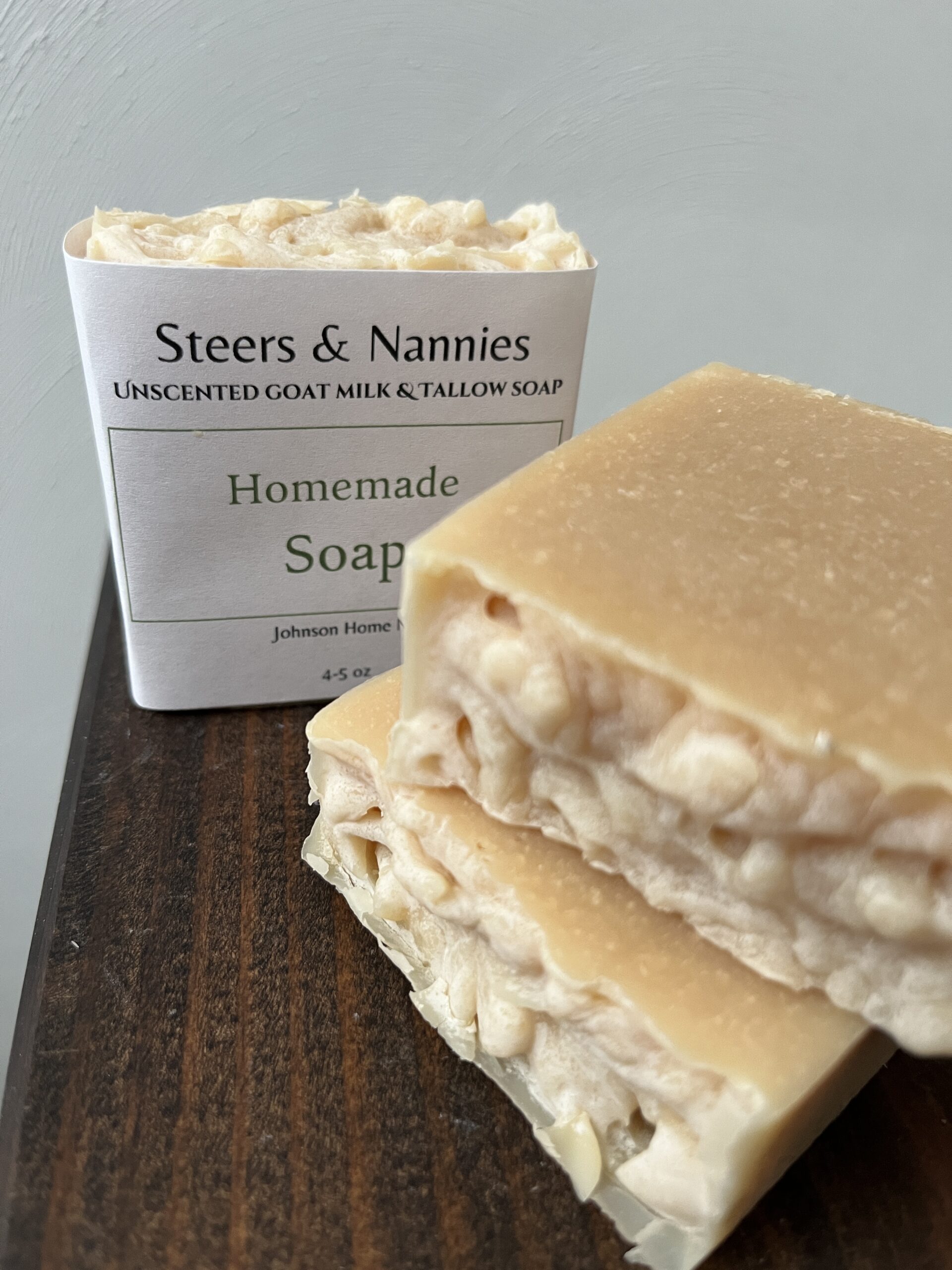
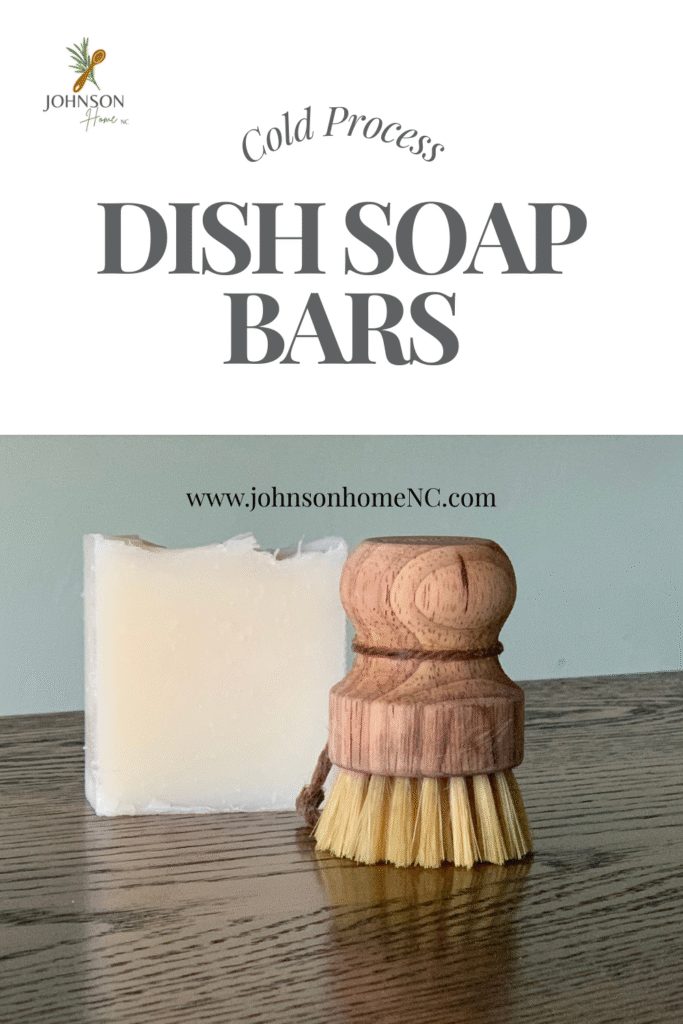
Washing dishes with a “soap” and a million ingredients on the label had me questioning why so many chemicals were needed in something used to clean my dishes. Sure, there’s the grease fighter, the food particle dissolver, but is there a “cleaner” way to clean dishes? Turns out there is! Here’s how to make a farmhouse style homemade dish soap in a solid bar form using the cold process soap making method. Use your dish cloth or a dish brush to wash single dishes with zero harmful chemicals left on your own hands or your dishes.

This post contains affiliate links, which means I make a small commission at no extra cost to you. Always shop small, local, and/or direct when you can, though!
Cold-Process Coconut Oil Dish Soap Bar Ingredients
- 30.40 oz Coconut Oil
- 1.60 oz Olive Oil
- 5.50 oz Sodium Hydroxide
- 12.16 oz Filtered Water
- 30 ml Essential Oils (optional)
Respect the Chemical Process
Reminders for handling lye:
- wear long sleeves
- don safety glasses (not your regular eye glasses or sunglasses)
- long kitchen gloves or short latex/vinyl examination gloves making sure long sleeves are covering wrist and arm.
- a mask such as an N95
- LYE TO WATER! Always add the lye crystals to the water, never the other way around
- Be in a ventilated area, preferably outside, when mixing the lye into the water
- Let your family and children know what you are doing and that you need a few minutes without them near it
- NO distractions! If you have little ones, consider doing this at nap time or bed time or when someone else is supervising the children. Soaping needs your undivided attention.
The Cold-Process
To begin, measure out every single ingredient into its own bowl first (or for experienced soapers: the oils/fat pot can be used to measure both coconut and olive oils in).
BE SURE TO USE CAUTION WITH LYE! All the proper equipment on (gloves, goggles, long sleeves, mask).
Allow the oils to melt on the stovetop while you take the lye and water outside to mix together. ALWAYS LYE INTO THE WATER! Stir it well and allow it to sit for 1 minute or until the lye water is mostly clear (no longer cloudy).
Then bring the lye bowl carefully back inside (the bowl will be HOT) and allow it to come down in temperature to around 95-100 degrees.
Once oils are melted, take the pot off the stove’s eye and allow the oils to come down to 90-100 degrees.
Keep a check on the temperature using a candy thermometer, wiping the stick between the oils and lye water bowls.
Once the temperatures are right, add the lye water to the oils pot and use an immersion blender to blend together.
I’ve found that trace happens fairly quickly so be paying attention!
At light trace, add in your fragrance oils or essential oils. Or none at all if you prefer a more pure dish soap.
Now, carefully pour the soap mixture into the loaf pan, place a sheet of parchment paper over top, then a towel to hold in the heat and allow the soap to slowly cool down.

Place the soap loaf in a safe, secure place. This soap loaf will be ready to cut in about 12 hours. Any longer and it becomes hard to cut. Not impossible, just much harder.
Finally, allow dish soap bars to cure for 4 weeks on ventilated shelving or rotate the bars every other day to allow for efficient curing.

Why single wash dishes instead of filling up the sink?
About 10 years ago or so when we custom built our “forever earthly home”, single deep sinks were all the rage. Turns out they still are. Those beautiful white farmhouse sinks or even the deep drop-in sinks. One huge sink.
The downside you don’t realize until after you get the sink? If you want to fill it up to wash a load of dishes by hand, you first have to:
- clear out the sink basin of all the dirty dishes
- pre-rinse the food stuffs off the dirty dishes
- if you’re a bit of a germaphobe like me, you now need to scrub the sink before you can clean anything inside of it
- now, you can fill the one big sink with soapy water
- BUT, when you rinse each dish you’ll be diluting the soapy sink water
Single, deep basin sinks MUST have been created for the automatic dishwasher owner OR the person who doesn’t mind washing single dishes by hand.
Great Scent Combinations for Dish Soap Bar Recipe
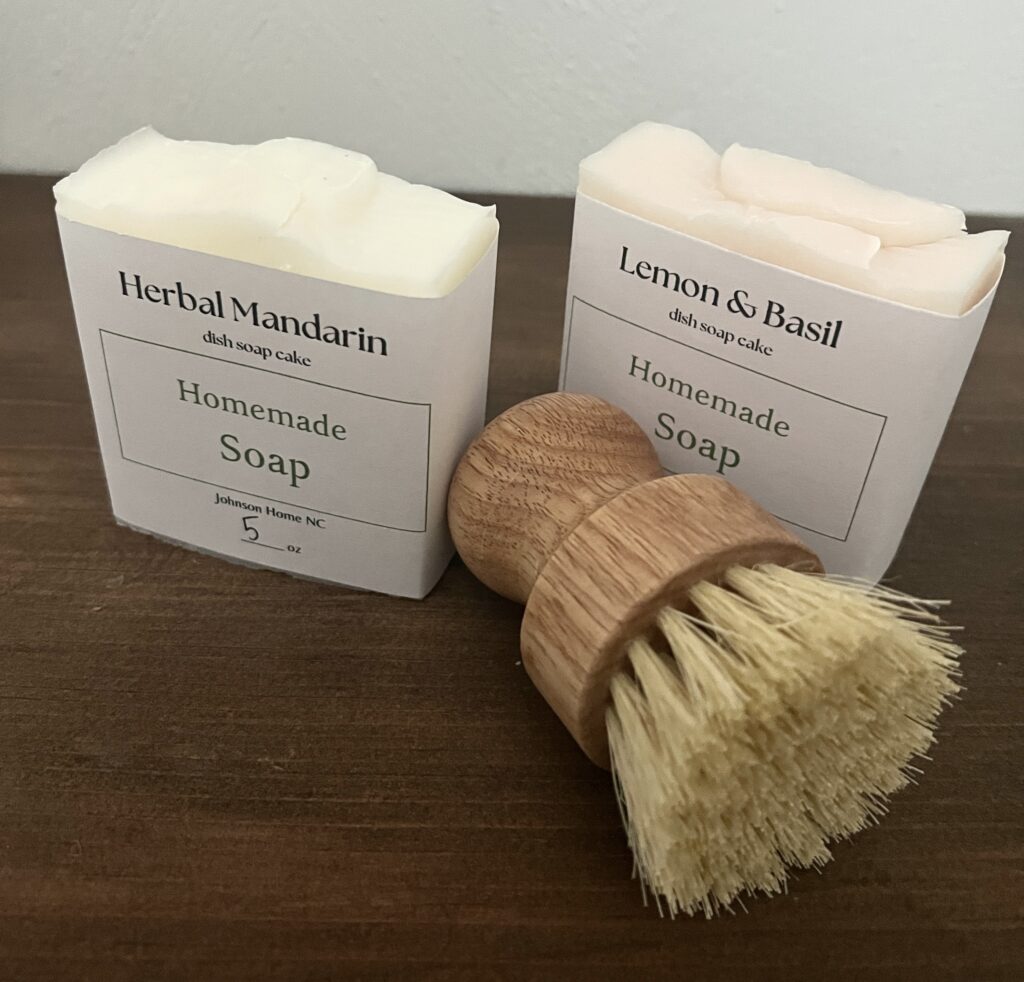
Lemon essential oil is a fabulous degreaser. How is an oil a DEgreaser? A question for our Creator. Don’t know how that works but it does!
Pro Tip: lemon EO also removes the annoying adhesive from stickers on glass like picture frames!
Rosemary and Lavender
Lemon and Sweet Orange
Fir Needle and Rosemary
Lime and Cedarwood
Peppermint and Lavender
Lemongrass and Lavender
Lemon and Lavender
Alternative way to pour this dish soap bar recipe
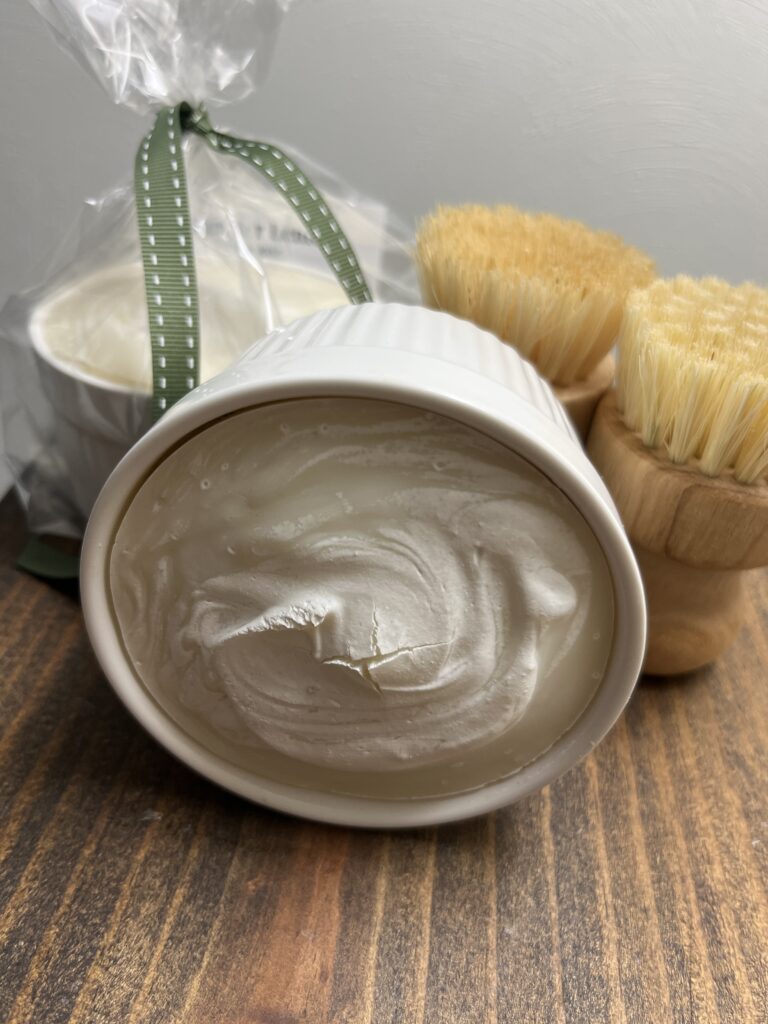
Ramekin dishes!
I’ve found a lot of interest and sales success by pouring dish soap into ramekin dishes I find in thrift stores. I try to get dishes that hold at least 2 bars of soap in ounces.
Bundle the dish soap ramekin with a dish brush in a square box with a cellophane front, wrap in twine, and sell as a gift set. Links below.
SHOP THIS POST
Best quality and value essential oils (use code JOHNSONHOMENCFREE)
Sodium Hydroxide lye (best deal I’ve been able to find!)
Craft paper boxes for gift bundling
If you like a more natural approach to cleaning products, try:

Best Swaps for Household Cleaning
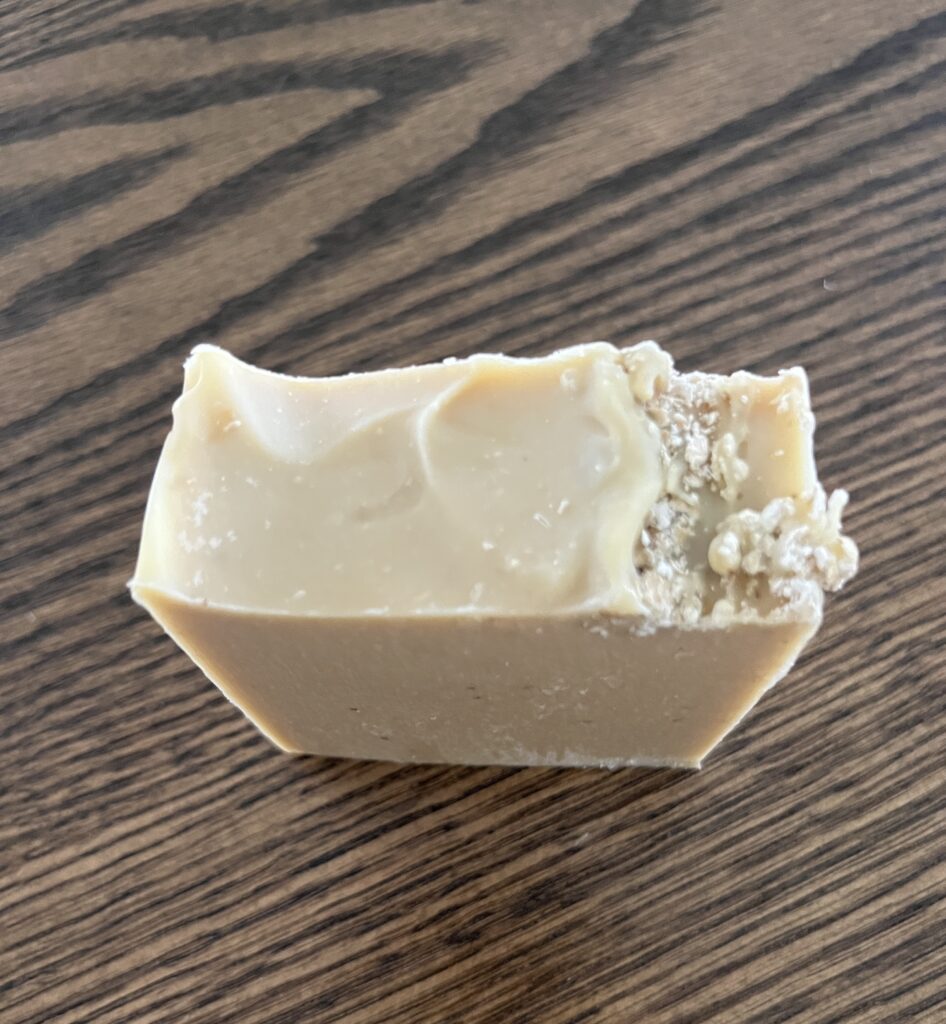
DIY Goats Milk, Oatmeal, and Honey Soap
Follow Along for More Soaping!
If you try this dish soap recipe, come back and leave a comment or share a picture on Facebook, Instagram, or Pinterest so I can see it!
Keep up to date on recent posts and sharings and more on Facebook, Pinterest, YouTube, and Instagram: @johnsonhomenc and sign up for my weekly newsletter where I share read time gardening and kitchen things from my home to yours: HERE.
Check out other Johnson Home NC affiliated links HERE.

Cold Process Dish Soap Bar
Materials
- 30.40 oz Coconut Oil
- 1.60 oz Olive Oil
- 5.50 oz Sodium Hydroxide
- 12.16 oz Filtered Water
- 30 ml Essential Oils optional
Instructions
- Measure out every single ingredient into its own bowl first (or for experienced soapers: the oils/fat pot can be used to measure both coconut and olive oils in).
- BE SURE TO USE CAUTION WITH LYE! All the proper equipment on (gloves, goggles, long sleeves, mask).
- Allow the oils to melt on the stovetop while you take the lye and water outside to mix together. ALWAYS LYE INTO THE WATER! Stir it well and allow it to sit for 1 minute or until the lye water is mostly clear (no longer cloudy).
- Bring the lye bowl carefully back inside (the bowl will be HOT) and allow it to come down in temperature to around 95-100 degrees.
- Once oils are melted, take the pot off the stove’s eye and allow the oils to come down to 90-100 degrees.
- Keep a check on the temperature using a candy thermometer, wiping the stick between the oils and lye water bowls.
- Once the temperatures are right, add the lye water to the oils pot and use an immersion blender to blend together.
- I’ve found that trace happens fairly quickly so be paying attention!
- At light trace, add in your fragrance oils or essential oils. Or none at all if you prefer a more pure dish soap.
- Carefully pour the soap mixture into the loaf pan, place a sheet of parchment paper over top, then a towel to hold in the heat and allow the soap to slowly cool down.
- Place the soap loaf in a safe, secure place. This soap loaf will be ready to cut in about 12 hours. Any longer and it becomes hard to cut. Not impossible, just much harder.
- Allow dish soap bars to cure for 4 weeks on ventilated shelving or rotate the bars every other day to allow for efficient curing.
Notes