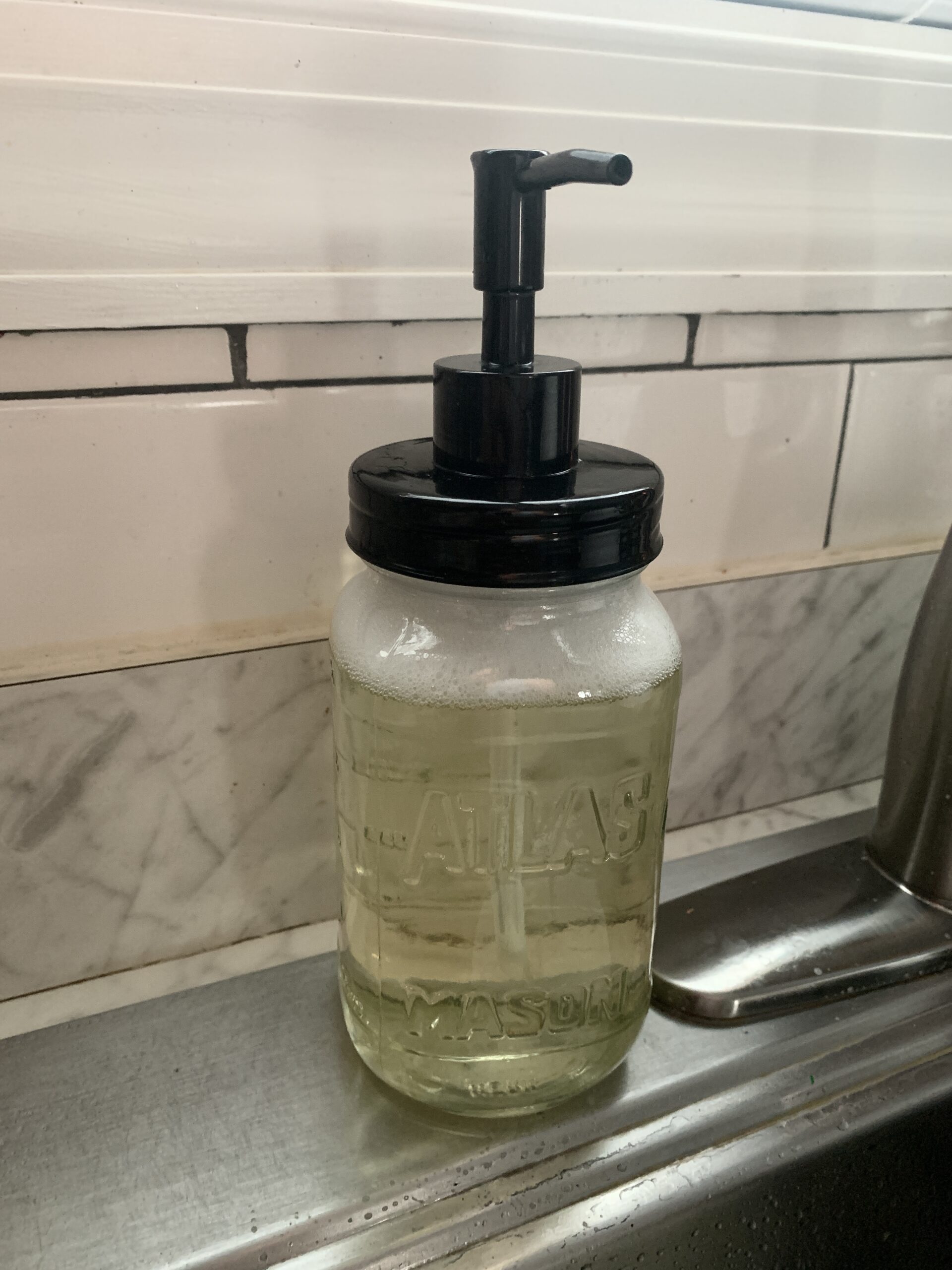
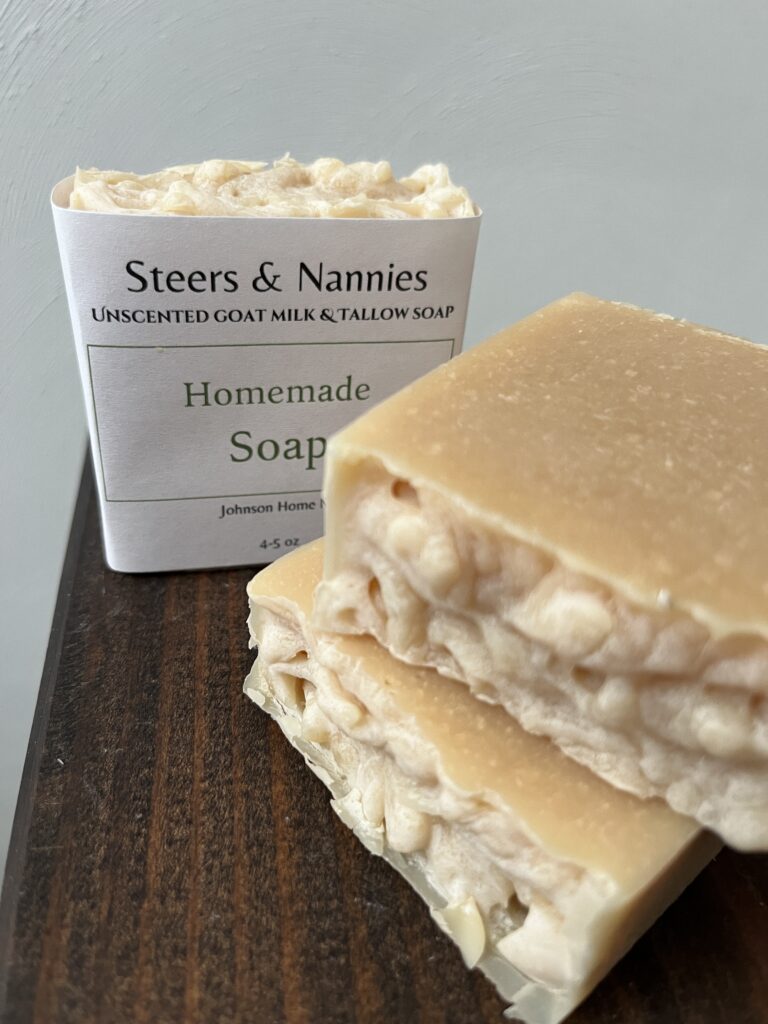
Get back to basics with cold process soap making with this homemade tallow and goats milk farmhouse soap recipe that will satisfy any modern day homesteader. This purely cleansing soap recipe contains beef tallow, fresh goats milk, coconut oil, and jojoba oil. A wonderful farm to skin, zero waste modern homesteaders dream soap. Grab this recipe for your soap making recipe book.
Modern Homesteading
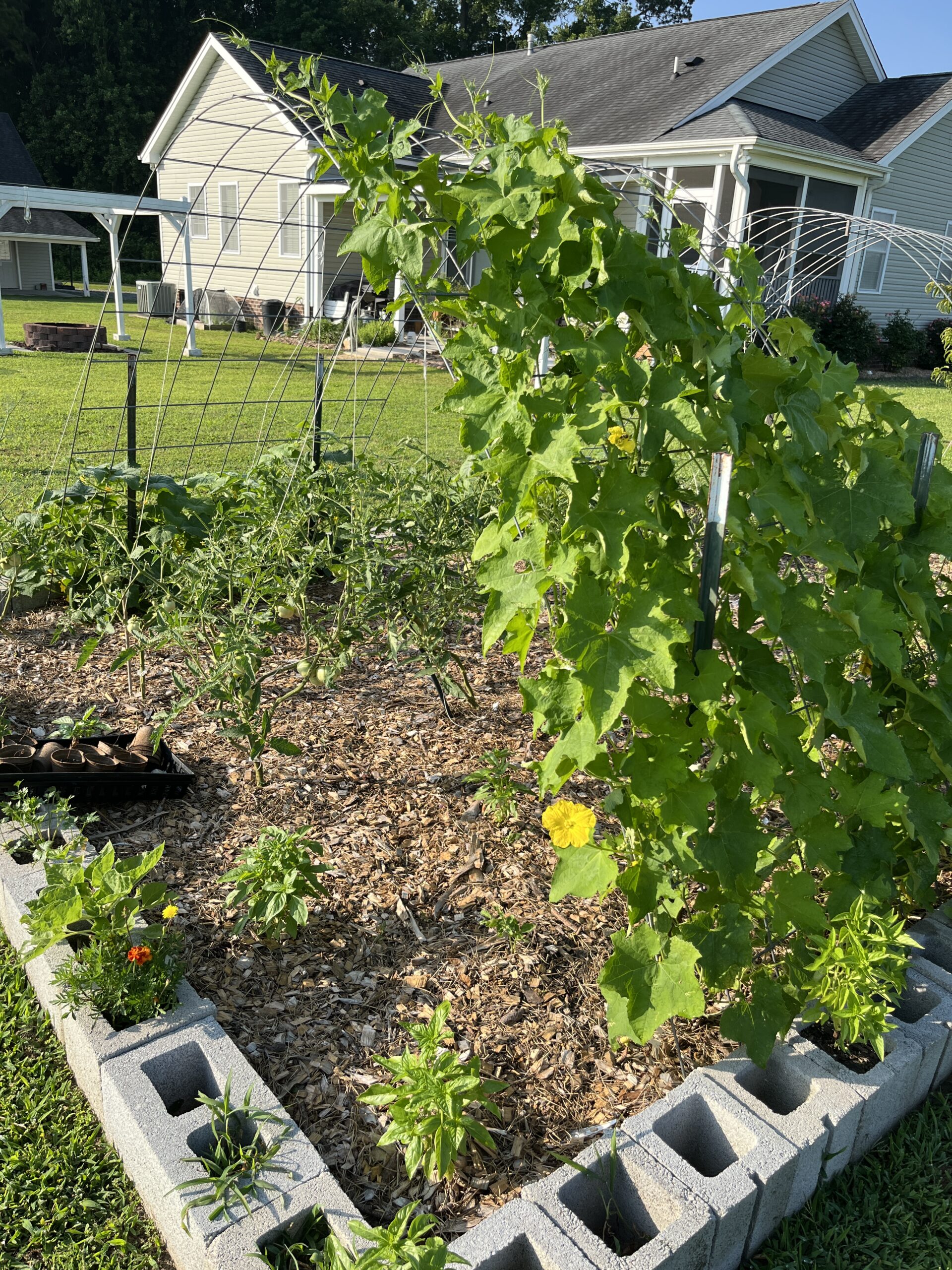
Homesteading in 2026 is interesting, to say the least.
My great grandmother would call what we’re doing today… “just living”. No other choices. It was just a way of life if they wanted to survive.
Times (finances) were tough and waste wasn’t an option. Eating nose to tail was normal and chewing the fat was necessary… if that fat wasn’t to be rendered for cooking or soaping.
My own grandmother was born in 1928, married at 20 years old, and has lived through many generations of technology advancements. She’s commented to me recently that when I have a choice, I choose to do it inconveniently. I reckon that’s her nice way of saying “I’ve done it before and don’t care to anymore”. HA!
In her young adult days, beef was terribly expensive and row crop farming brought in very little money so my grandfather raised hogs as a side business. To feed his family and sell to the community. Hog killings were an annual community event where oftentimes kids got out of school for 2 days to help. Beef tallow wasn’t as readily available on the farm as lard was.
One day I’ll venture into soap making with lard as I do have pig fat to render from our homegrown pigs but for today, this tallow and goats milk soap recipe comes from ingredients sourced locally as well as some organic ingredients purchased online.
Modern homesteading is a beautiful mix of old skills and more efficient technologies.
Ingredients and sourcing
This homemade tallow and goats milk cold process method soap recipe is a zero waste idea for the steer you had raised to fill the freezer and something to do with all that excess goats milk.
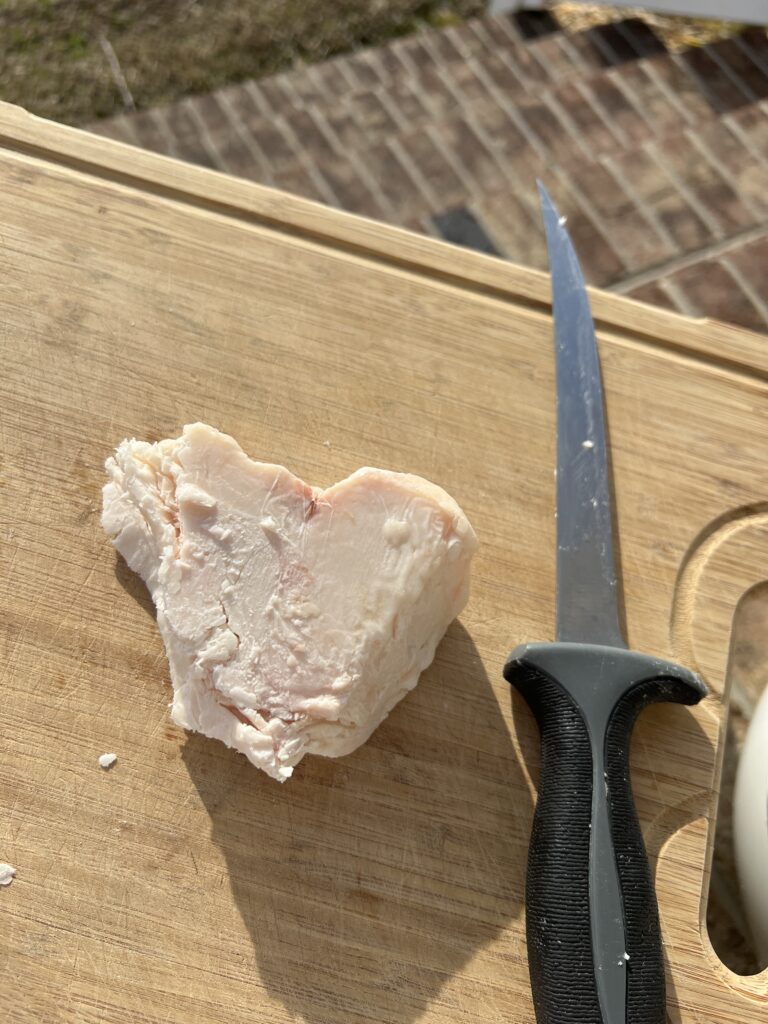
I confess I do not have the land to raise my own beef but a friend does beef shares and I always ask for the trim and suet fats. I also do not own goats (no thank you!) but my friend down the road has lots of fresh goats milk daily.
Coconut oil is sourced from Azure Standard by the gallon and it is organic and affordable. This oil can be used in cooking and soaping, making it a wise investment to purchase by the gallon.
Jojoba oil can be sourced from Azure as well or Amazon. It’s actually an ester wax which has some debates online as a “moisturizer” since the wax makes water impenetrable to the skin. It is used in this recipe for its emollient properties. Here is a link to the National Library of Medicine’s latest article on jojoba oil if you love science.
Tallow and Goats Milk Ingredients
12.16 oz fresh goats milk, frozen
3.95 oz sodium hydroxide (lye for solid soap making)
19.20 oz beef tallow
3.20 oz coconut oil
9.60 oz jojoba oil
Important Lye Handling Instructions
When handling lye, always remember these best practices to avoid injury:
- wear long sleeves
- don safety glasses (not your regular eye glasses or sunglasses)
- long kitchen gloves or short latex/vinyl examination gloves, protect hands and wrists.
- mask such as an N95
- LYE TO WATER! Or in this case, slowly adding a little lye at a time to the frozen milk cubes and carefully stirring. NEVER add water to lye! “Snow falls on the lake” I think is a popular saying to help remember lye to water.
- Be in a ventilated area, preferably outside, when mixing the lye onto the frozen ice cubes of milk.
- Let your family and children know what you are doing and that you need a few minutes without them near it.
- NO distractions! If you have little ones, consider doing this at nap time or bed time or when someone else is supervising the children.
- Soaping needs your FULL attention to detail.
Before you begin, do this
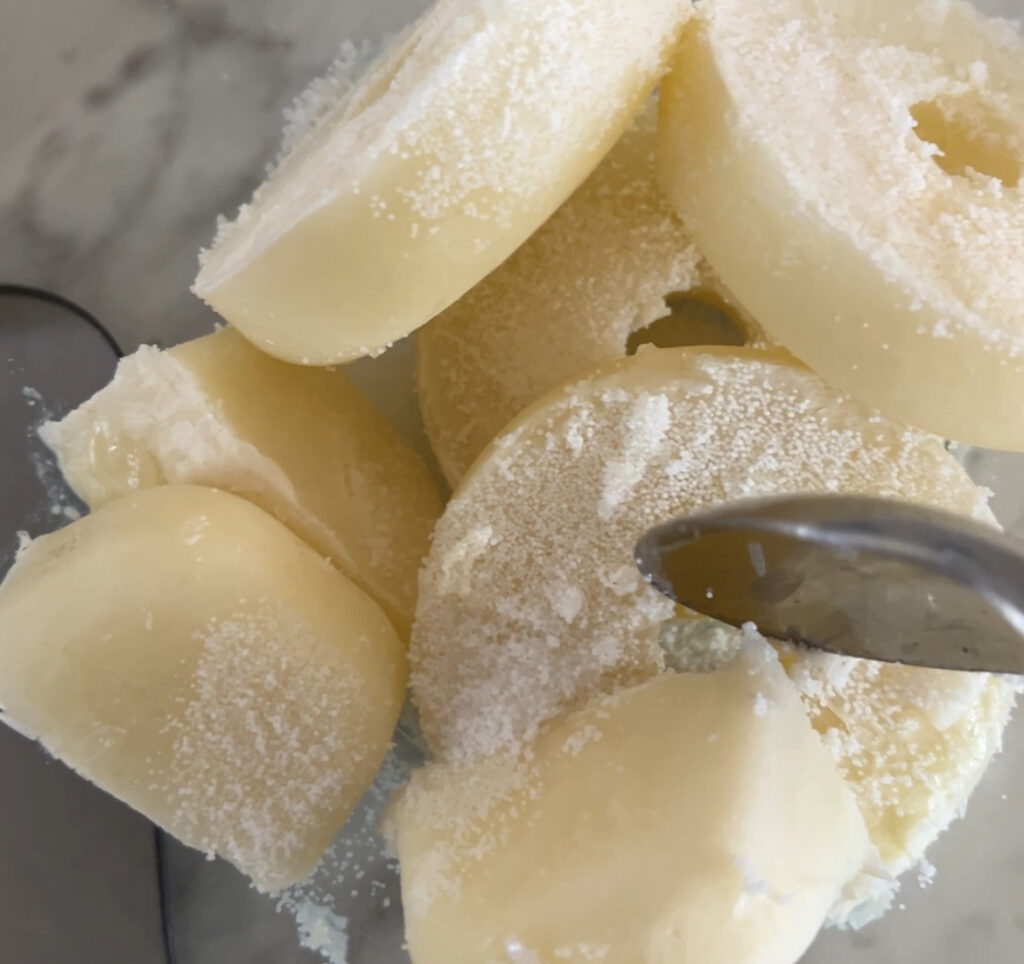
Before making this tallow and goats milk soap, it’s important to freeze the goat’s milk into ice cube trays.
The reason the milk needs to be frozen first is because it is replacing the water in this soap recipe. Since the lye heats up so quickly and when in contact with the liquid (the water content in the milk), the milk can scorch and become discolored. Using frozen milk allows the lye not to get too hot too fast.
The freezing milk process needs 8-10 hours before it will be ready to be used to make tallow and goats milk soap.
Set aside frozen goats milk cubes
When the goats milk is frozen into ice cubes and you are ready to make your tallow and goats milk soap, get the cubes weighed out and set aside in a lye-safe bowl.
Best Practice Tip: thrift shop for a Pyrex bowl JUST for soap making.
Then continue to prepare other ingredients. This extra time will allow the frozen goats milk cubes to start thawing slightly. The moisture helps the lye to kick start heating up slowly.
Adding lye, in my experience, directly to cubes just taken out of the freezer takes a lot longer to melt. I’ve also noticed that the temperate of the goats milk will not get above 80 degrees which it needs to in order to mix in with the oils and fats for proper saponification to occur.
Measure oils and fats
Using your designated stock pot for soaping (again, pro tip is to thrift a stainless steel stock pot for soaping only!), measure out the oils and fats needed for this soap recipe.
Now place the pot on the stove at low heat to melt. Keep an eye out. When the oils and fats are totally melted, turn off the stove top and remove the pot from the eye to cool.
Measure out any at-trace ingredients
This tallow and goats milk soap recipe is very versatile with add-ins.
Feel free to add in colorants, fragrances, or any other add-in you like at the end of the soap blending.
Get those ingredients measured out and set to the side so they are ready to be used when your soap comes to light trace.
Measure lye
Using a lye safe bowl (again, THRIFT IT!), measure the lye into the bowl and set it aside until it is needed.
Be sure to use proper lye handling instructions from above! Lye will burn you if incorrectly handled.
Goats Milk Cubes and Lye Union
Now is the time to begin slowly adding lye on top of the frozen (but slightly thawing) goats milk cubes. Lightly sprinkle the lye onto the cubes, about 1 spoonful at a time. Use a lye-safe spoon to stir the lye into the frozen cubes.
Allow lye to sit with the cubes for 1 minute before sprinkling on more lye, stirring, and allowing to sit.
Continuing to stir and not leaving the lye and goats milk will ensure that the milk does not scorch.
Scorching will result in a darker brown soap. If adding a colorant add-in at trace, this may affect the color of your soap’s finished product.
If you’re like me who doesn’t care for colors, natural or otherwise, then the brown-ness of the tallow and goats milk soap finished product is no matter.
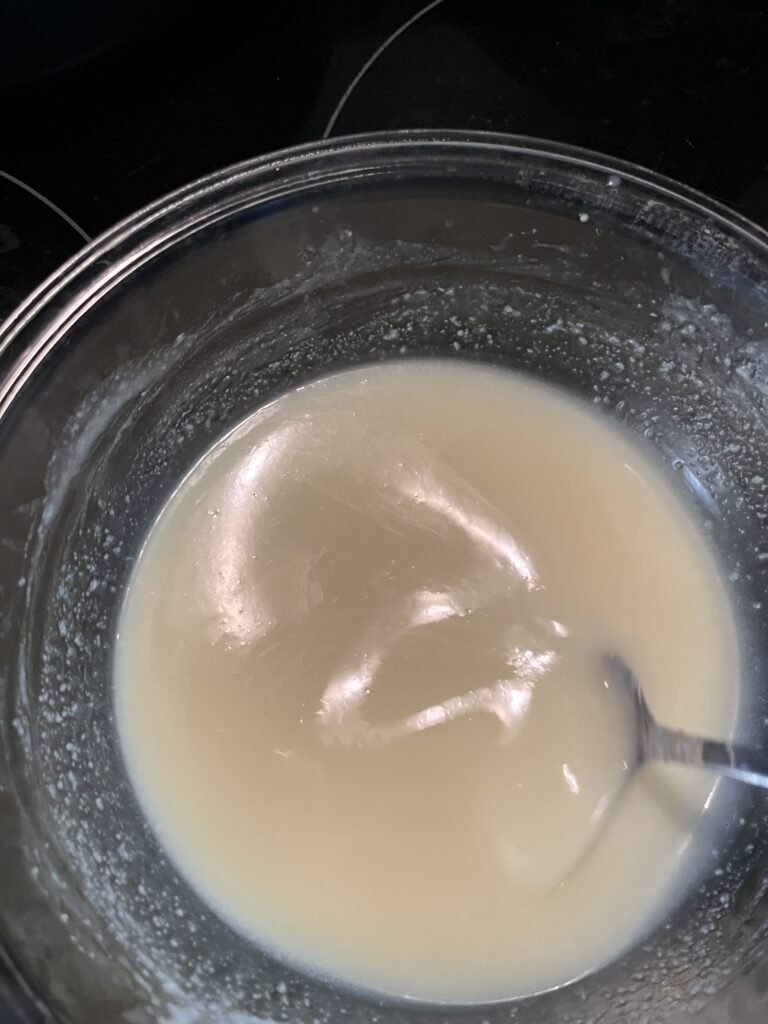
Continue adding lye until all is in with the goats milk. Then continue stirring until all of the goats milk is melted. You may notice the goats milk looking grainy. This is normal depending on the fat content of the goats milk you have acquired. It will not affect the end product.
Oil and Lye Temperatures
Now that the lye is mixed into the goats milk and it is melted, use a candy thermometer to check the temperature of the oils/fats. The temperature needs to be between 85 and 95 degrees Farenheit. If it is still too hot, allow it to cool down more.
Pro Tip: if you’re a confident soaper, feel free to use a casserole pan with about 1 inch of cold water to add the stock pot to the water to cool faster. Keep checking the temperature!
The goats milk and lye mixture should also be between 85 and 95 degrees Farenheit.
Pro Tip: if for some reason the lye-milk mixture gets below 85 degrees, you can set that bowl on top of a sauce pot with 2 inches of water in the sauce pot on the stove top on low to heat the mixture up slowly. Continue to stir and take its temp. This can make the mixture heat up fast and scorch so be mindful!
Be sure to wipe the candy thermometer with a paper towel between checking temperature of the milk-lye and the oils/fats.
Bring soap to light trace
With this tallow and goats milk soap, you’ll want to blend the lye-milk and oils/fats until they reach light trace.
Use an immersion blender to incorporate the lye-milk and oils/fats for saponification to occur for a series of 5 sets of 1 minute of blending, 2 minutes of rest or until the soap reaches light trace. These sets are an estimate. Keep looking for the light trace to appear on top of the blended soap!
You will know the soap is at light trace (explained and shown in that link) when you drizzle the soap mixture over the surface of the soap in the pot and it leaves behind a trail or a trace that doesn’t go away. It sits right on top of the blended soap.

If you are adding any essential or fragrance oils, colorants, or herbs/flowers into the soap; this is the step when you add those then blend for another 30 seconds.
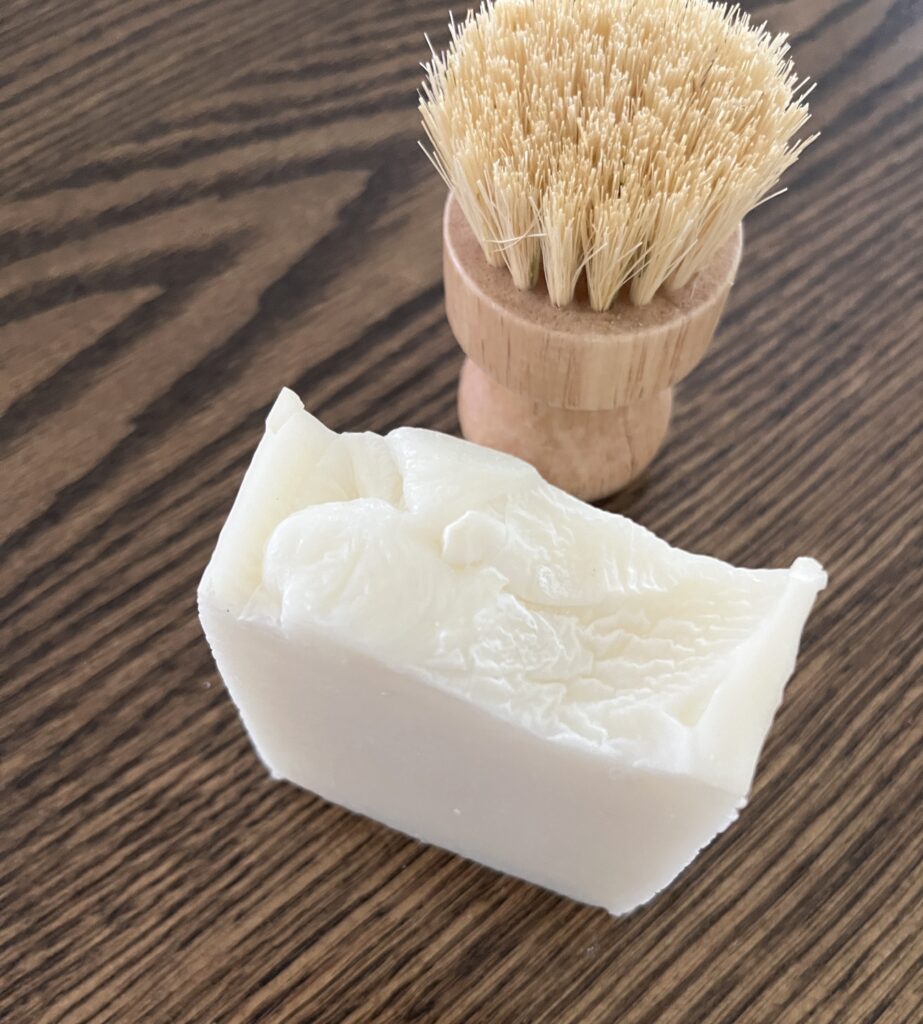
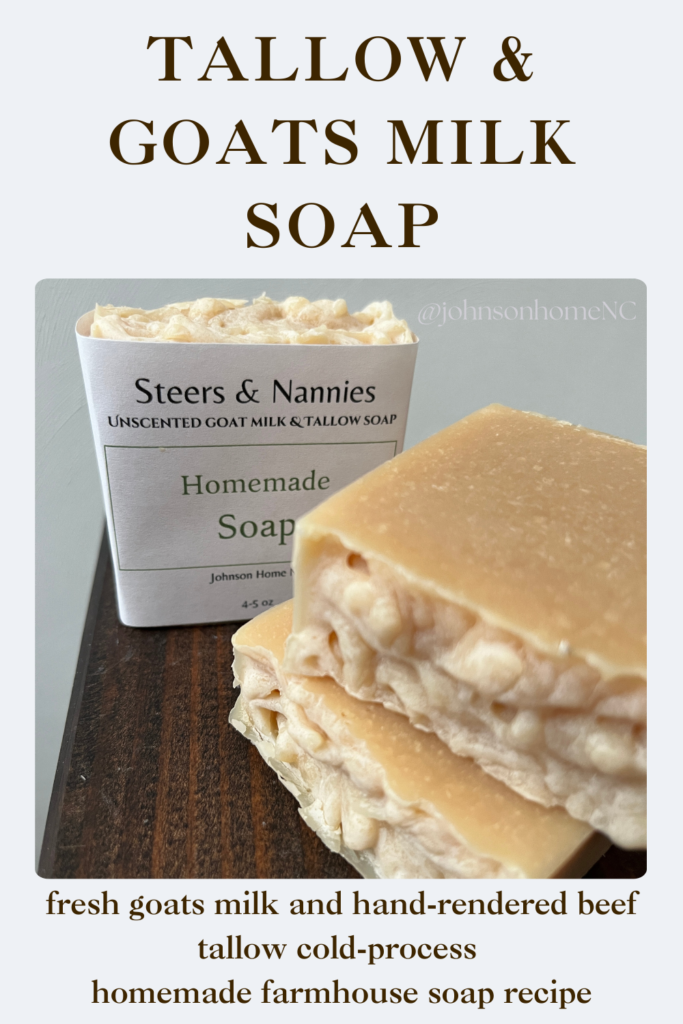
This tallow and goats milk soap recipe makes a great rustic farmhouse soap. No scent, no color. Just mild skin cleansing farm to skin soap.
Pour Soap and Sit
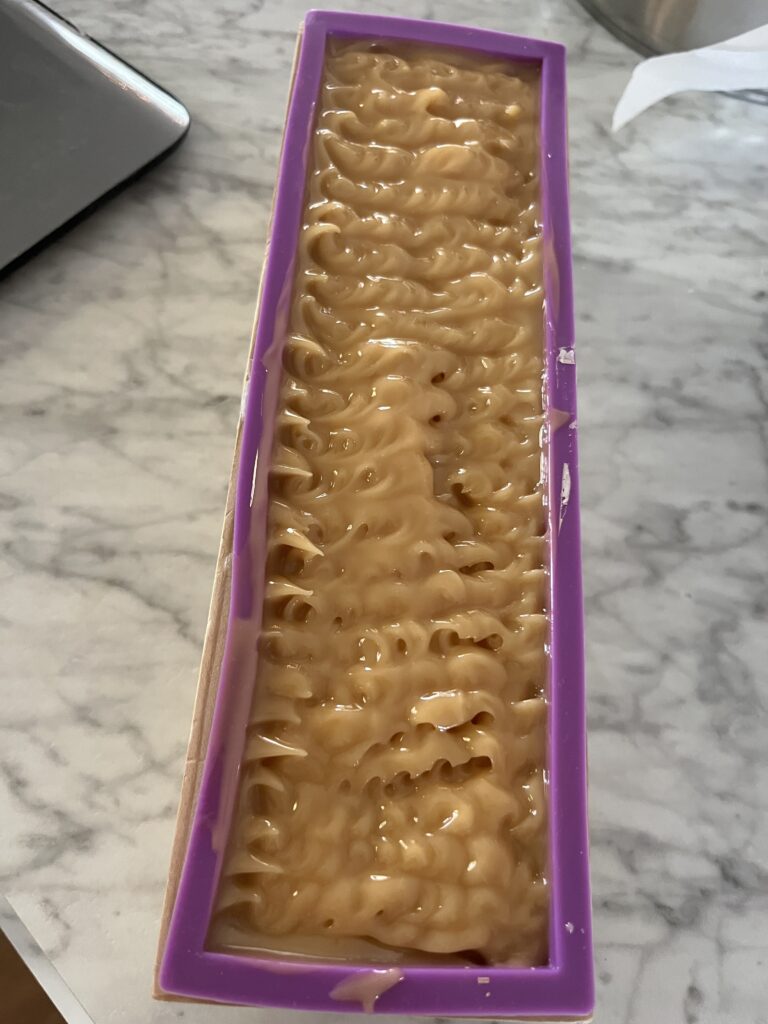
Once light trace is achieved and all add-ins are blended into the soap, pour the soap carefully into the soap mold. Use a silicone spatula or spoon to get all of the soap off the sides of the pot.
Now cover the soap mold with a sheet of parchment paper then with a thick towel. This will keep the heat in to allow a slower cooling down process. Cooling too fast can cause issues with the finished soap product.
Then allow the soap to sit for 12-24 hours before cutting.
Soap Clean Up
It is a good practice to keep gloves on while cleaning up the soap making area and washing the dishes related to the soaping procedure.
Cut and Cure
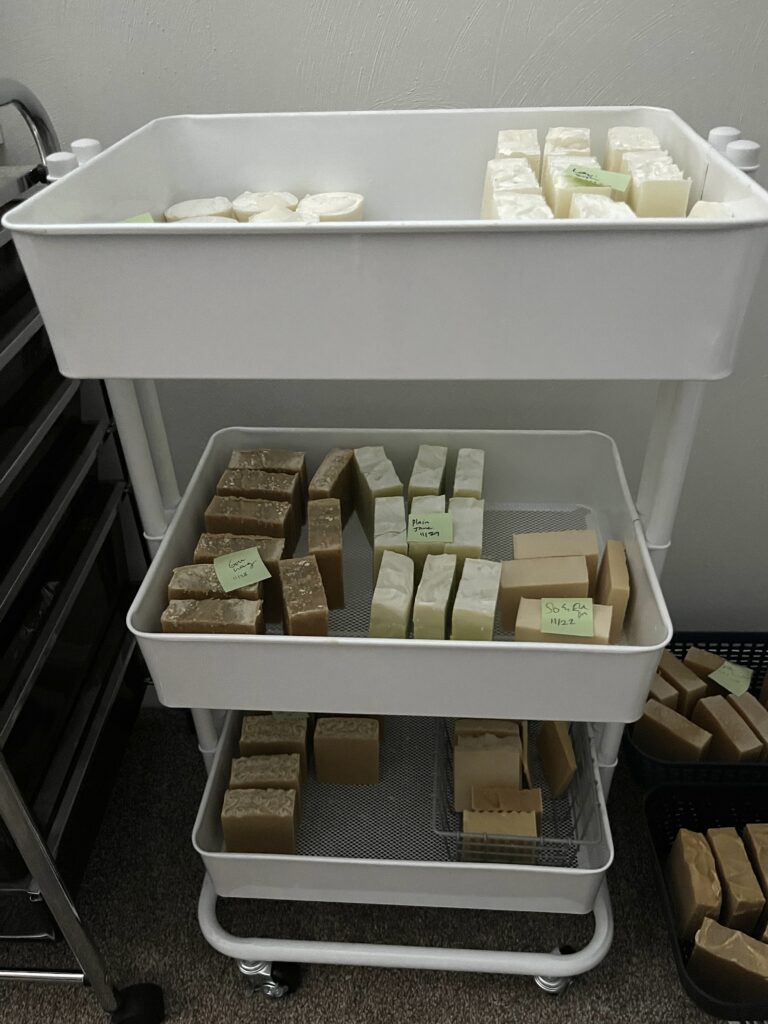
After the soap has set for 12-24 hours, take the soap loaf out of the mold to cut the soap into bars the size you prefer.
If the soap still feels too soft or gummy, allow it to cool for longer before cutting.
Now set each bar on a well-ventilated shelf or table to cure for 4-6 weeks before using. If you do not have a wire or ventilated shelf, turn the soaps over every couple of days to allow the soap to evenly cure all the way around.
SHOP THIS POST
Sodium hydroxide (lye for solid soap bars)
Ventilated cart for soap curing
More homemade soap recipes
For more homemade soap recipes, click here.
Pin this recipe
Tallow and Goats Milk Soap
Equipment
- kitchen scale
- immersion blender
- stock pot
- 2 mixing bowls
- silicone spatula or spoon
- 2 stainless steel spoons
- soap loaf mold
Materials
- 12.16 oz fresh goats milk frozen into cubes
- 19.20 oz beef tallow
- 9.60 oz jojoba oil
- 3.20 oz coconut oil
- 3.95 oz sodium hydroxide
Instructions
Prepare Ahead
- Freeze goats milk into ice cubes at least 8-10 hours before using in this soap recipe.
- If you are adding oatmeal, flower petals, herbs, colorants, or essential/fragrance oils, get those prepared and measured.
- Set aside at-trace add-ins for when the soap comes to a light trace when you can add these ingredients into the mixture and blend well.
Frozen Goats Milk
- It is a good practice to measure out goats milk ice cubes first and set aside about 15 minutes before doing any other process. This gives the frozen milk a few minutes to melt a little before adding the lye. The water/milk that has melted some kick starts the lye heating process.
Oil/Fats Temperature
- Heat the measured oils and fats in a stock pot over low heat until all have melted together. Stir constantly and remove from heat as soon as all are melted.
- Check the temperature of your oils using thermometer. It could be anywhere from 110-150 degrees. The oils will need to come down to about 85-95 degrees for this recipe. Allow the oils/fats plenty of time to come down to that temperature.
- This can take 20 minutes, give or take. Check the temperature often.
Goats Milk and Lye Union
- Sprinkle lye by the spoonful carefully over the frozen, but thawing, goats milk ice cubes and stir constantly.
- Add another spoonful and stir. Repeat until all lye is gone. Stir constantly to avoid milk getting too hot and scorching.
- Using a thermometer, measure the temperature of both the oils/fats and lye once it is melted together, making sure to wipe the stick with a paper towel between bowls.
- When the temperatures are between 95 and 85 degrees for both or either oil/fats pot and goats milk-lye, you can add the lye-milk mixture to the oils/fats and begin blending with an immersion blender.
Bring Soap to Trace
- Use an immersion blender to incorporate the lye-milk and oils for blending for a series of 5 sets of 1 minute of blending, 2 minutes of rest or until the soap reaches light trace. These sets are give or take. Could be more sets, could be less. Keep looking for the light trace!
- You will know the soap is at light trace when you drizzle the soap mixture over the surface of the soap in the pot and it leaves behind a trail or a trace that doesn’t go away. It sits right on top.
- If you are adding any essential or fragrance oils, colorants, or herbs/flowers; this is the step when you add those then blend again for another 30 seconds.
Pour and Let Sit
- Once all ingredients are well incorporated, carefully pour the soap into the soap loaf.
- Then cover the soap loaf with parchment paper then a towel and allow it to rest in a safe place for 18-24 hours.
Cut and Cure
- The next day, it is safe to cut the soap into bars to sit and cure for about 4 weeks, perhaps a little more if the soap bars still feel soft.