Building a homestead on small acreage is easy to do with many options! We homestead one acre but really only use the back half. Planning out what you can do with what you have is the key to a successful small acre homestead. Here are the 3 wisest moves to make when building a small homestead.
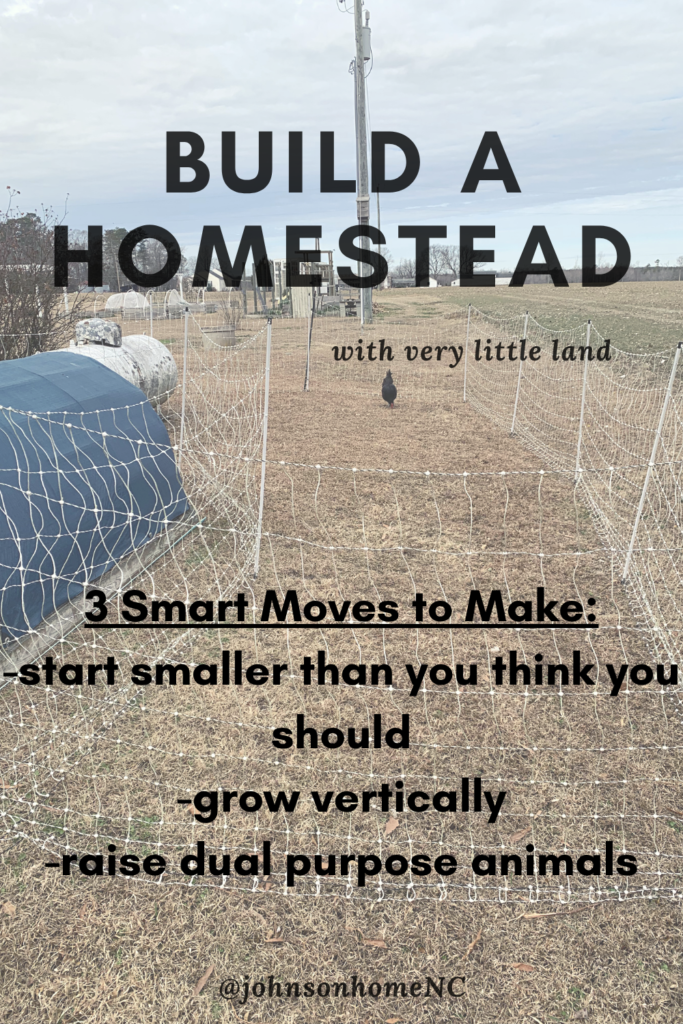
This blog post is based on personal experience with a one acre homestead. Everyone’s experience will differ.
This blog post may contain affiliate links inside of other links but none are directly linked in this particular blog post. Affiliate links earn us a commission if you choose to use those links but there is no cost to you to click on the links.
The 3 Moves
- Start smaller than you think you should. Don’t leave yet! I promise to explain.
- Grow vertically.
- Raise dual purpose animals.
Where to start?
- vision
- goal
- plan of action
The vision. Know why you want to homestead and your family’s values. Without this, you will quit fast and easy because there will be no “reason” anchoring you down.
The goal(s). What do you want to do that brings the vision into fruition?
The plan of action. What baby steps accomplish your goals?
Example: The Vision is to know where 85% of our food comes from. The goal: raise and grow as much of our food as possible to preserve; at least 8 laying hens, 30 Cornish Cross for meat, 20 tomato plants, 40 green bean plants, 4 of our most used herbs, 6 pepper plants, one bed of potatoes, at least 70 jars of food on the shelf for winter while eating from the garden all summer too… The Plan of Action: raise laying hens for eggs and learn how to preserve extra eggs for winter, meat chickens once a year for meat to freeze and pressure can, plan a big spring and summer garden plus a smaller fall garden, preserve the harvest by learning to pressure can and water bath can, drying and dehydrating.

Caveat to The Vision:
If the vision is to save money, perhaps homesteading is not the option. Building a homestead can be done frugally but oftentimes it takes funds to get certain things started. Making a plan ahead of time and organizing your “want to dos” on paper will give you a better visual and help you to budget accordingly. Lots of creativity and ingenuity will help in being cost effective while building a homestead.
Our family doesn’t take lavish vacations (hard to with animals to care for) or drive brand new vehicles. We spend our money on things like digital pressure canners and freeze dryers; organic chicken feed for the layers and putting a half a beef in the freezer each year. Values-based decision making.
Move No. 1: Start small than you think you should
Why is this a wise move when you are trying to BUILD a small homestead?
Because biting off more than you can chew right out of the gate is a sure-fire way to burn yourself out, throw in the towel, and forget homesteading altogether.
Start small. Real small. Smaller than you think you should. It’s a lot of work.
But first, make a homestead blueprint plan!
Take a piece of plain paper and a sharpened Ticonderoga pencil and sketch your property. Making sure to note the house, any outbuildings, and utilities lines (gas, electric, water, etc., you do not want to go building anything permanent on top of these lines or even digging too deep).
On the back side of the paper, make a list of the things you WANT to do. Go big! Dream bigger. What do you really WANT to have one day on your small property. Write it down.
Now, number those dreams based on what you KNOW you can put on your property right now. Example: I want a milk cow some kind of bad. With only one acre, it’s not NOT doable; it’s just not a wise decision for a host of reasons. Reasons I have written down so I can remember why it’s NOT a good idea at the moment. Space, infrastructure like a stanchion, hay barn, weather shelter for her, fencing, costs and more.
Back to the front of the paper. Use your drawing to sketch in where you want to put the things you want to start with first. Keep in mind with animals and their manure have a smell. A plan for keeping that at bay (rotating fencing, wood chips/a carbon to cover over frequently) and its proximity to your house, water sources, living and play areas. How far do you want to transport water to your animals and how will you do it?
Get good THEN add something else
Starting small at first is just a great practice for making sure it is something you can handle before adding more onto your plate. Animals or even a big garden take a lot of work and need multiple hands.

Such as:
- Once you master and build or acquire what’s needed for chickens or rabbits, then consider the goats, sheep, pigs, cows, or whatever other animal.
- Once you are comfortable with two 20 foot rows in the garden, then next summer add another row.
- Once you understand and have an entire year or so with your bees, then add on the quail.
You get the point.
Other things to consider
When you dive in to homesteading, starting small is important because there’s other life that has to be done too.
Full time job, homemaking and keeping, and other responsibilities.
In the summer, the peak of homesteading season (new births, garden tending and harvesting, preserving, etc.) is also the peak of other summer activities. Examples may include: vacations, sports season, other recreational obligations, swimming pool maintenance, yard work, and more.
Your social life will revolve around the homestead.
Planning a homestead is all fun and games in the late winter and early spring but when life gets to lifin’ in the summer, the to-do list grows rapidly and continually for several months. The weather is hot, it’s humid, the bugs are awful, you’d rather be inside in the air conditioning.
Not to turn you off or away from homesteading, just be realistic and think things through well. You CAN have a social life AND a homestead, it just takes planning.
Smart Move No.2: Grow vertically
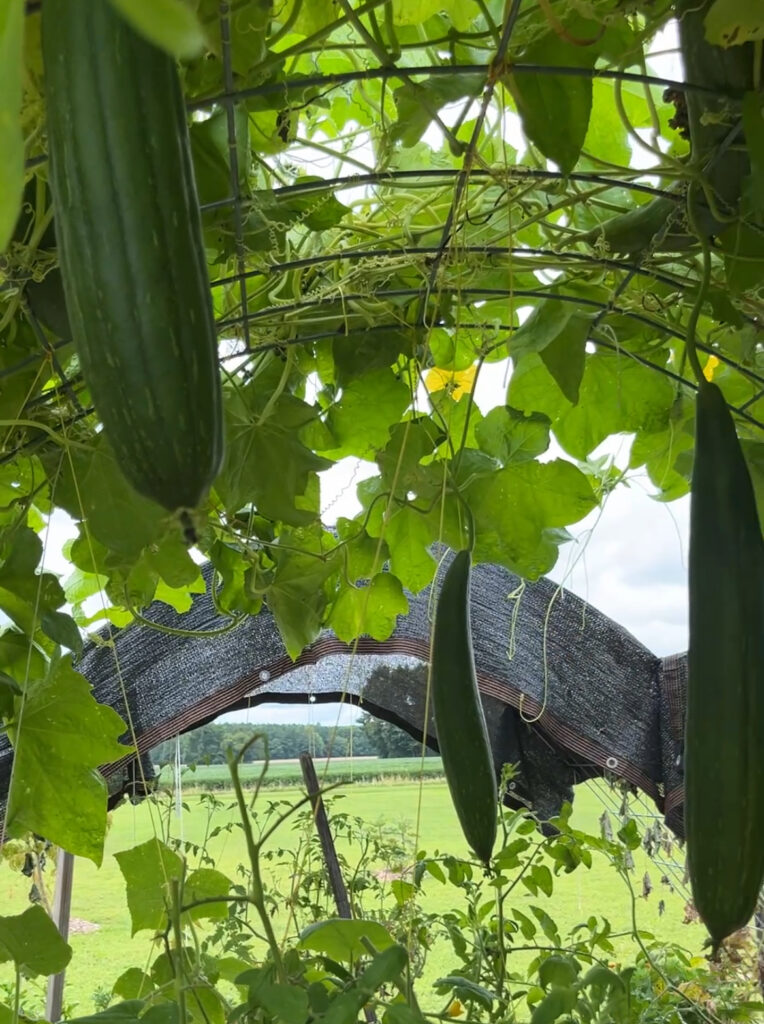
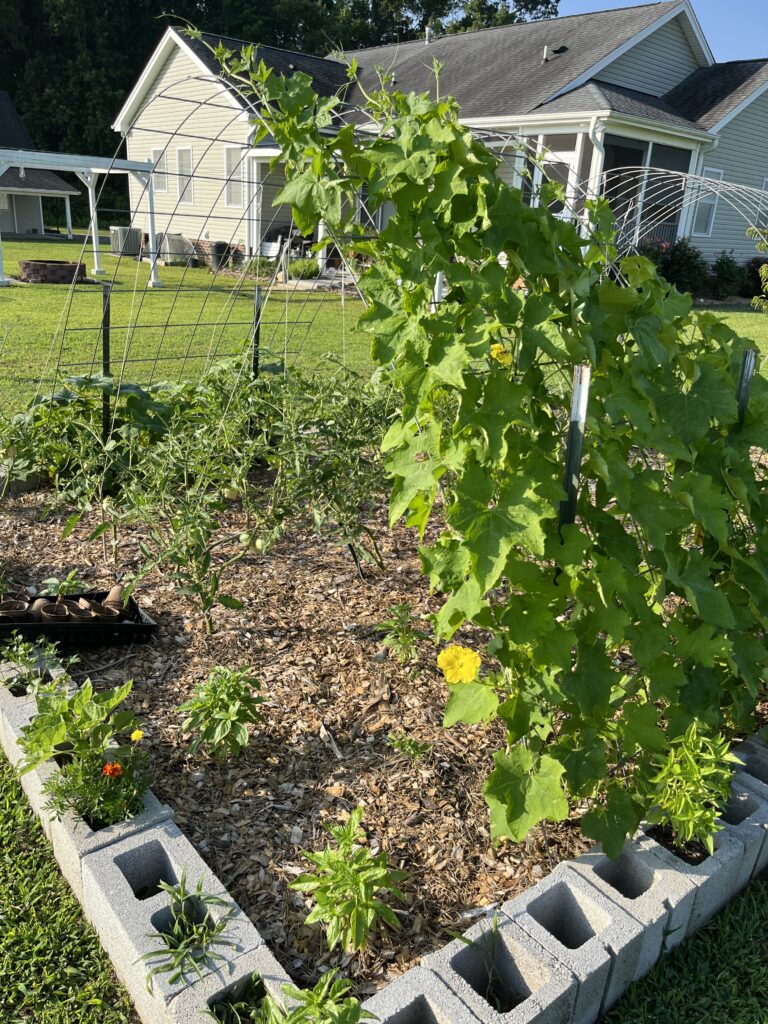
If ground space is limited, grow vertically.
- grow towers
- cattle panel arches and t-posts
- fruit trees (arguably the FIRST place to start with your homestead blueprint drawing from above!)
- orcharding is a study all on its own! Lots of maintenance (spraying, pruning, fertilizing) throughout the year and at the right times.
- berry bushes like blueberries (train thornless blackberries to vertical trellis)
- multi-purpose trellising (use fencing, the patio’s pergola, or the clothesline posts to grow climbing vegetables)
- container gardening (for moving around as needed)
- multi-level garden beds
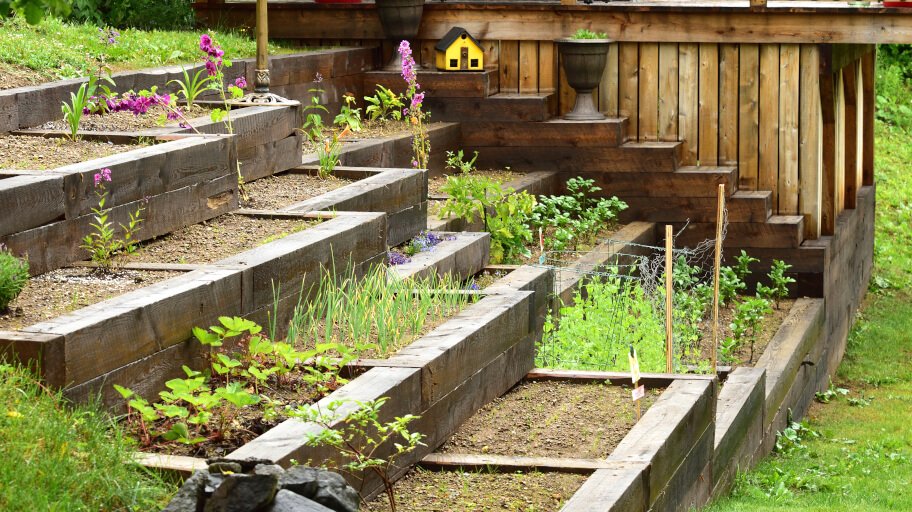

Move No. 3: Raise dual purpose animals
If you choose to raise animals on your homestead, small livestock or poultry, consider them being dual purpose.

- Laying hens for eggs and meat and cleaning up the garden space
- Goats for milk and meat
- Sheep for milk and meat and mulch (wool)
- Quail for eggs and meat
- Rabbits for fertilizer and meat
- Pigs for clean up and meat
- Bees for honey, candle making, propolis, and pollination
Make your homestead animals earn their keep.
Building a Homestead INSIDE
Last thought to consider before this blog post turns into a whole novel:
Homesteading is not specifically for outside, on the land, in the yard. Homesteading is INSIDE the home too.

Whether that home be a farmhouse, a suburban house, an RV on a campsite, or an apartment in the sky; homesteading can be done right in your kitchen.
Homesteading is a way of life and a mindset. It is a whole lifestyle. The way you choose to live life.
Cooking from scratch, learning sourdough and bread baking, making your own fruit jams, etc.– that’s still homesteading!
More building a homestead posts
How to raise 68 meat chickens on 1/2 an acre
How to work with each season on the homestead
8 ways to make homesteading more affordable
What can you do with a one acre homestead?

If you found this realistic and helpful
Then be sure to pin it and share it with a friend!
Any good thing worth it takes time. So the same applies when building a homestead on a small property or acreage.
With that said, much can be done on a small plot of land with creativity, ingenuity, and the willingness to research, try, and experiment.
Feel free to follow Johnson Home NC on Facebook, Instagram, Pinterest, and YouTube for more one acre homesteading content and ideas!
Allow me to slip into your email inbox weekly with kitchen, gardening, natural cleaning, and chicken raising real time happenings from our one acre North Carolina homestead right to you by joining our email list HERE.