Working with the seasons and what each season has to offer will help the homesteader and farmer to not wear down so fast, maybe especially when your homestead doesn’t have the extra farm hands it wishes it could have. Read on for how we work with and not against seasonal homesteading.
This post contains affiliate links, which means I make a small commission at no extra cost to you. Always shop small, local, and/or direct when you can, though!
Homesteading burnout is real
It’s important to know where to draw boundaries for yourself and your farm as a homesteader. Burn out is real and happens slowly and unknowingly until it bears its full weight on you seemingly out of no where.
Working with the seasons and what they offer can help the homesteader:
1- keep tasks organized
2- keep priorities in line
3- prevent overwhelm and thus, burnout
Not every farmer has a type A personality but it serves the farmer well to be somewhat organized. Most have a plan for crop rotation, seed sowing, pasture management, expected delivery dates, etc. Using those plans will help prioritize daily tasks in seasonal homesteading.
DISCLAIMER: What I will share below is based on our experience with a one acre homestead that does not have livestock. I won’t pretend to know what all a cattle farmer experiences in a day but I do know God knew what He was doing when He made each season and the sun to set when it does. It’s my thinking that we homesteaders and farmers would do well to work with the planned REST He gave us in a week and throughout the year.
“There are only 24 hours in a day” is a very accurate saying. So use them wisely with a plan of action and know “an ounce of prevention is worth a pound of cure” while seasonal homesteading or farming of any sort.
Spring

Spring is for:
- seedlings
- new baby chickens
- fresh eggs
- herbs
- new births
- fresh grass
Does it feel like the New Year really isn’t at the turn of the calendar year in January? Perhaps there’s more to that feeling! We are using a Gregorian calendar currently which is only about 400 years old. Believers know the world is several thousand years old so how was time told in Jesus’ time, even Noah’s time?
I’m no Bible scholar but the Word talks a lot of the moon, sun, and stars. Using those as time, clocks; yes, even days and months.
So, does sometime around April 1st feel more like a new year to you? It does for me.
What to do in this “new year” of seasonal homesteading
New life in fresh grass, leaves, trees budding. New pasture babies being born, baby birds, and kittens. The days are growing longer, the sun is warmer, the air just smells fresher.
Springtime for the homesteader is “come on, let’s go”. Seeds to be sown, pastures to be managed, births to be had, and more. There’s a lot to do and time frames to accomplish them in.
If you want a thriving summer garden full of green beans, tomatoes, peppers, and herbs; spring is the time to intentionally plan which day you’ll sow which seeds. In the winter, you likely made a plan in your garden journal so now all you have to do is execute the plan.
Gardens and fruit trees need fertilizing, compost, and likely soil amendments for a great harvest ahead.
Spring is when we get a few new laying hens and our first round of meat chickens to restock the freezer supply of white meat.
The coop needs a clean out and fresh bedding. Maybe the run’s floor needs new sand, straw, or wood chips. Time to take down the wind breaks and spruce up the place a bit for happy chickens.
Eggs are coming out of your ears now as the girls ramp up egg production as the days lengthen. Every meal you cook has egg in it somewhere. Your roadside egg stand is happy again.
Summer
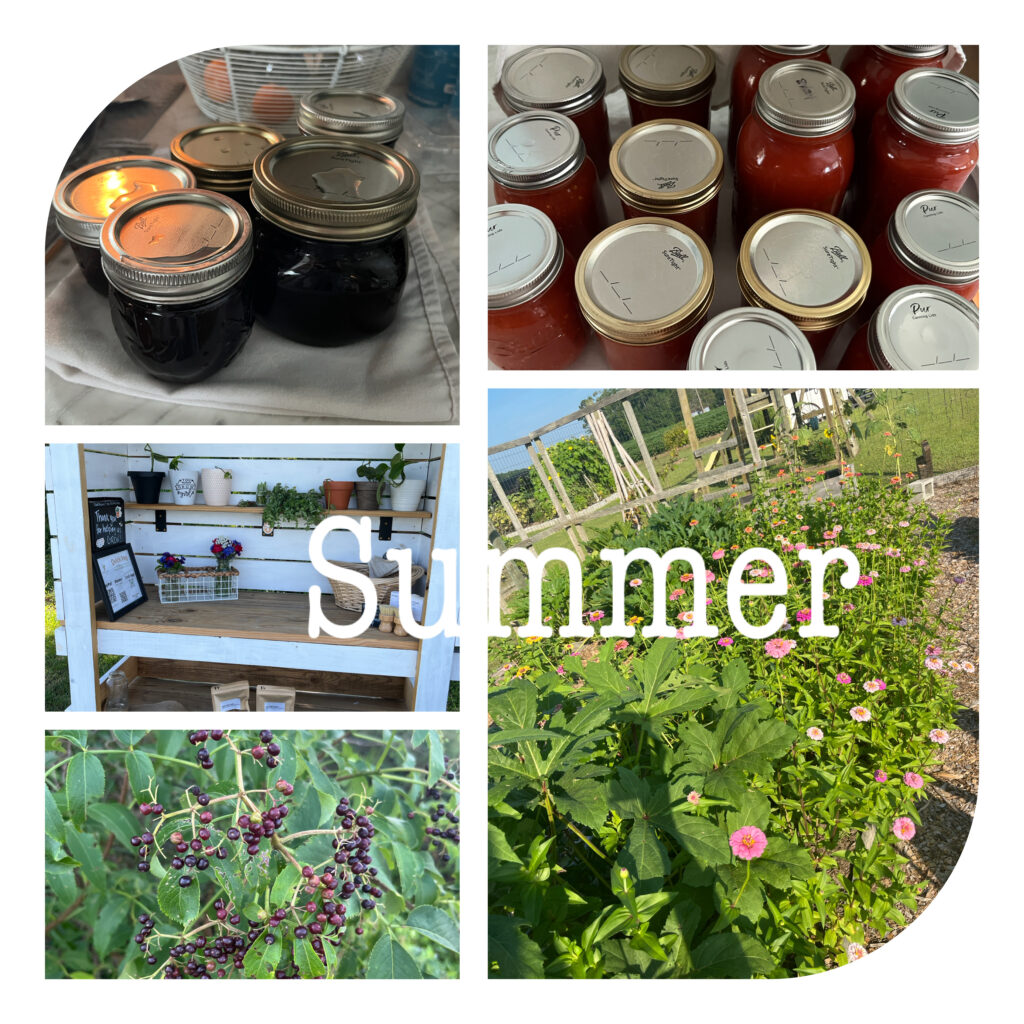
Summer is for:
- foraging
- flowers
- harvesting
- farm stands
- fermenting
- preserving
Ahh, summer on the homestead. Maybe the least favorite one in the seasonal homesteading pack of 4.
It’s hot as Hades if you’re in the south. Every thing is growing, including and maybe especially the weeds.
There’s harvesting spring crops, sowing summer and early fall crops, and keeping on top of those dang weeds! Summer brings heat and summer showers which those weeds just absolutely love.
Harvests are daily and preserving is too. Standing over hot stoves and pressure canners aren’t the most summer fun but they’ve gotta be done to fill the larder again.
Summer meals are full of fresh vegetables and not much beats the taste of a red tomato on a slice of bread with a dollop of mayonnaise. Oftentimes in summer there’s only enough energy for garden fresh vegetables for dinner.
Livestock need more water than normal, shade is hard to come by, and those summer showers don’t like to come up when they are needed most.
Summertime for the homesteader is tiring and hot. But there’s work to be done in order to enjoy the fruits of our labor in the winter.
A Pressure Canner you don’t have to stand over and watch!
Our favorite way to tame weeds
Fall

Fall is for:
- last garden harvests
- meat chickens
- baking
- overabundance offerings
Things start to cool down SOME in the fall on the homestead. If you’re in the south, it’s heavy on the some.
A first frost may be in store to take out the rest of your summer garden but your fall greens love it.
Putting the garden to rest by cutting down summer plants and adding compost and mulch to your gardens is on the to-do list. Fruit trees need a bit more mulching and maybe even an organic fungicide spray. Perhaps it’s time to start bringing out some stored hay from the summer for the livestock.
It’s also time on our homestead to process our last meat birds of the year to stock the freezer for the winter. Perhaps getting a beef to the processor for your freezer is now too.
Preparing the chicken run for winter winds and weather is something to consider in the fall as well. Wind breaks, new roosting bars or things to stand on like 2x4s for snow days to create walkways for the birds, and fresh wood chips, sand, straw, whatever you use for your run’s floor.
Raising meat chickens on 1/2 an acre
Winter
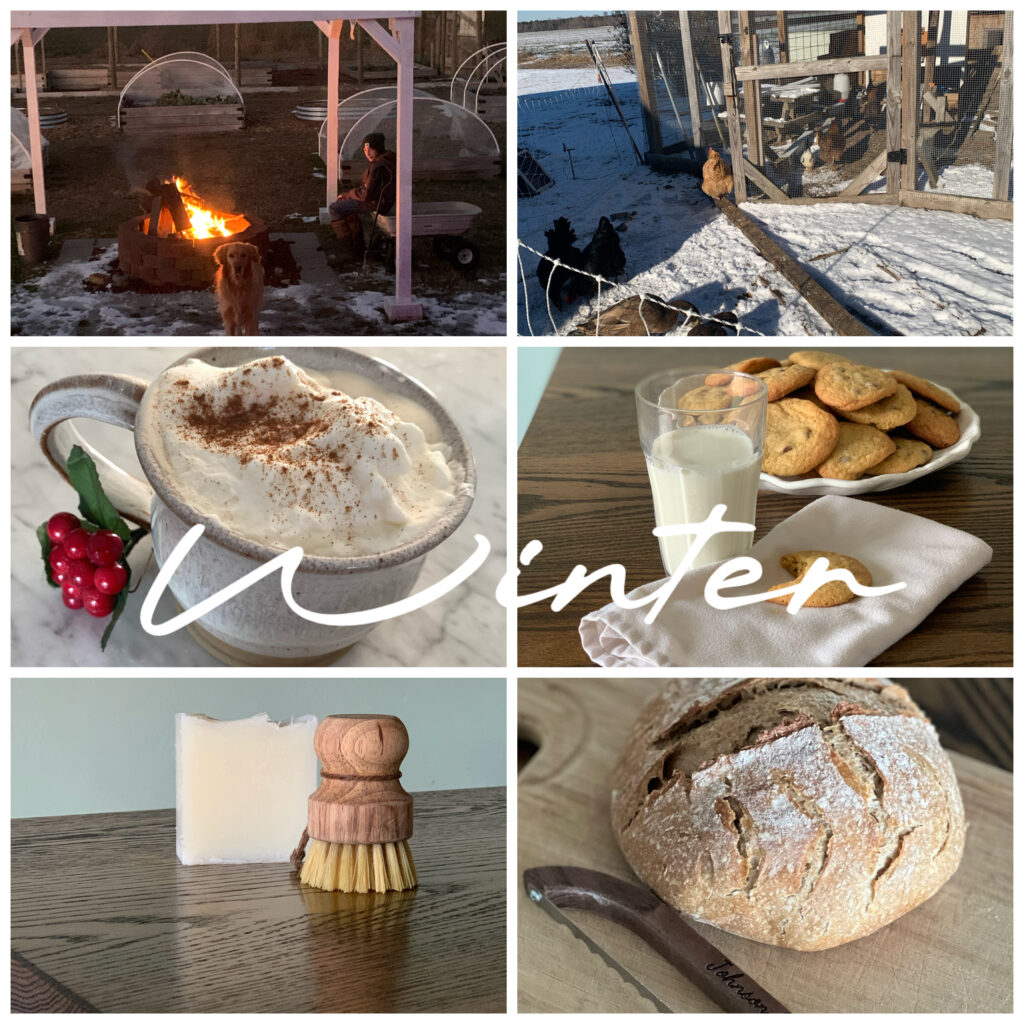
Winter is for:
- crafting
- bread baking
- new soup recipes
- resting
- reading
- snow days
- fires
If you’re a homesteader and winter isn’t your favorite season of the year, then you might not own livestock.
It’s true, I only have chickens on our homestead. No 4 legged big beasts to tend.
Even still, winter is a time of rest. And planning ahead in the other three months will help you adjust to more rest time in the winter.
Sure, there are still chores like thawing waterers, adding fresh hay or bedding, checking on pregnant animals who may give birth in late winter, etc. For the most part, there is REST built into the middle of your winter days.
Maybe you keep true to winter tradition and process a hog. Now’s the time to age it well, hanging in the cold winter air. This is winter work but the reward is delicious.
How to romanticize winters on the homestead:
Winter is the time to plan your spring garden on paper in your garden journal, order seed catalogs, sip hot beverages, and try out a few new baking recipes. Sure, let’s go ahead and “romanticize” this part of homesteading because if you can’t find at least some sort of LOVE for the farming you do, you’ll find it easy to quit on your worst day. Do your spring and summer planning on paper in front of the fire, wrapped up in a warm blanket, sipping a hot mug of herbal tea.
Your soup pot is your best friend. Boots, coats, and gloves take over the mud room. The sun is sparse but lovely when it shines. Going to bed with the sun is the next best thing to bathing in its rays on the southern most spot of your homestead on sunny winter days.
Breathing seems easier in the cold air. Life is quieter for the most part. This is the time for the homesteader to seek that quiet and relish in it too after the daily chores are done. This is working seasonal homesteading to your advantage.
How to make chicken bone broth
Is it easy to rest as a homesteader?
No, not really. Not when there are animals that still rely on you for food, water, and safety.
But I can confidently say that if you can plan your garden and pasture management, you can also plan a little bit of rest in the winter for your mind, body, and soul. It’s not even negotiable, really.
This is how a homesteader can attempt to avoid burnout.
God made Adam a gardener. A steward of the land. He also gave him and us all an easy plan of action– by following the seasons (and the moon too).

Check out these 9 Cozy Winter Hobbies for the Homesteader.
What are your thoughts on seasonal homesteading? Share in the comments below.
Follow along for more
Feel free to follow Johnson Home NC on Facebook, Instagram, Pinterest, and YouTube.
Allow me to slip into your email inbox weekly with kitchen, gardening, and chicken raising real time happenings from our one acre North Carolina homestead right to you by joining our email list HERE.